As the air turns crisp and the leaves begin to change, autumn invites children to slow down, look closely, and discover the beauty of transformation. At Chickadee Ridge, we see fall as a season full of wonder—one that encourages curiosity, observation, and emotional connection to the world around us.
The natural rhythm of the seasons is one of a child’s earliest lessons in change. Watching leaves turn, acorns drop, or animals prepare for winter offers countless opportunities for learning—and just as importantly, for grounding.
🌿 Nature as Our Classroom
Children are natural scientists. When they crunch through leaves, collect pinecones, or watch a raindrop race down a window, they’re engaging in hands-on exploration and sensory learning.
Outdoor experiences in fall spark all areas of development:
- Language and observation skills as children describe what they see, smell, and hear.
- Math and science thinking as they sort leaves by size, count seeds, or compare textures.
- Social-emotional growth as they work together, share discoveries, and build a sense of community in nature.
Each simple moment outdoors builds connection—to others, to nature, and to themselves.
🍂 Embracing Change and Letting Go
Fall naturally mirrors the process of emotional growth. Just as trees let go of their leaves, children learn to adapt to change—new routines, new friendships, new experiences.
In early childhood, these lessons are best taught gently and experientially. Raking and watching leaves fall can open conversations about change: “The leaves are falling now because it’s time for the trees to rest.” Moments like this help children connect emotional experiences (letting go, saying goodbye, starting something new) to the rhythms of the world around them.
Nature teaches that change is both beautiful and necessary—a message children carry into all areas of life.
🌧️ Learning Doesn’t Stop When It Rains
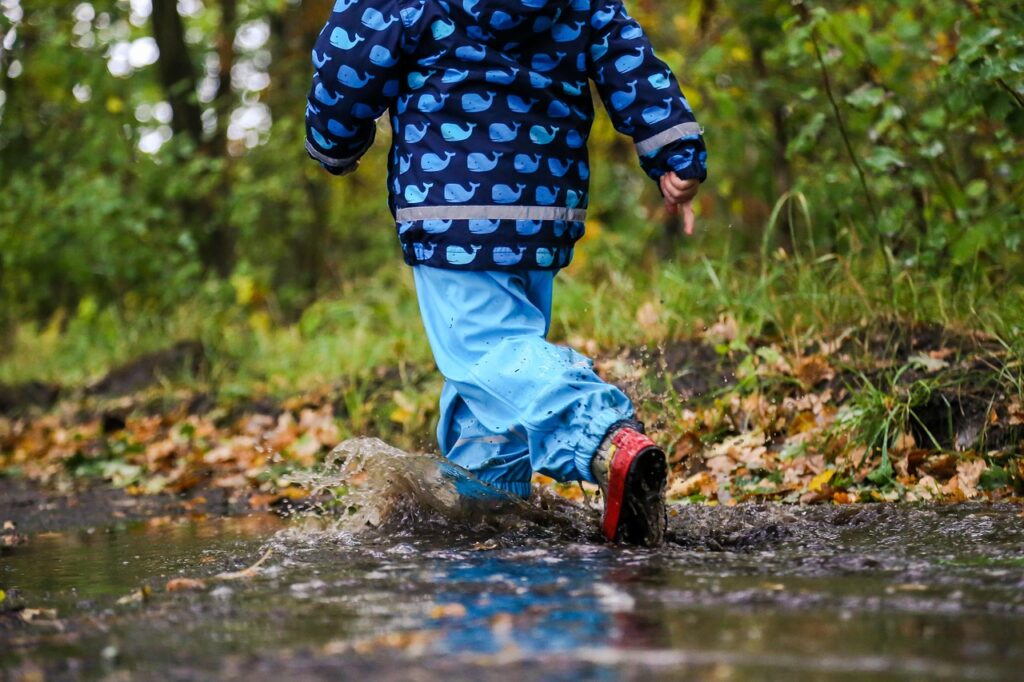
There’s no such thing as bad weather, just opportunities to explore differently. A drizzly day offers sensory play in puddles, the sound of raindrops on leaves, and the smell of wet earth. These experiences awaken the senses and teach children to appreciate nature in all its moods.
When we provide rain gear and time to explore safely outdoors, children learn resilience and adaptability. They discover that joy can be found in all kinds of days—a lesson that nurtures emotional strength.
🧡 Nature and Emotional Well-Being
Spending time outdoors supports emotional regulation. Research in early childhood psychology shows that nature lowers stress, enhances focus, and fosters calm. In our busy, overstimulated world, outdoor play offers space to breathe and reset.
At Chickadee Ridge, we see this daily. A child who’s feeling overwhelmed may find comfort in watching the wind move through tall grass, or by collecting small treasures to share. Nature grounds children, offering sensory balance and emotional peace.
🍁 Simple Ways Families Can Celebrate Fall
There are so many gentle, joyful ways to connect with the season together:
• Take a leaf walk and notice the many shapes and colors.
• Create a nature table at home—a small space to display leaves, pinecones, or seed pods your child collects.
• Make “thankful leaf” art by writing or drawing something you’re grateful for on each leaf.
• Enjoy quiet outdoor time, even for a few minutes a day—watching clouds, listening to birds, or feeling the breeze.
Each small act helps children build mindfulness, gratitude, and appreciation for change.
🌻 A Season to Grow Together
Autumn reminds us that learning doesn’t always happen at a table or with a worksheet. It happens in the rustle of leaves, the rhythm of rain, and the simple act of noticing.
When we allow children to explore with all their senses—to touch, to wonder, to ask questions—we nurture not only their curiosity, but also their confidence and inner calm.
At Chickadee Ridge, we embrace the beauty of this season as both teachers and learners. Together, we celebrate change, connection, and the quiet magic of nature in fall.